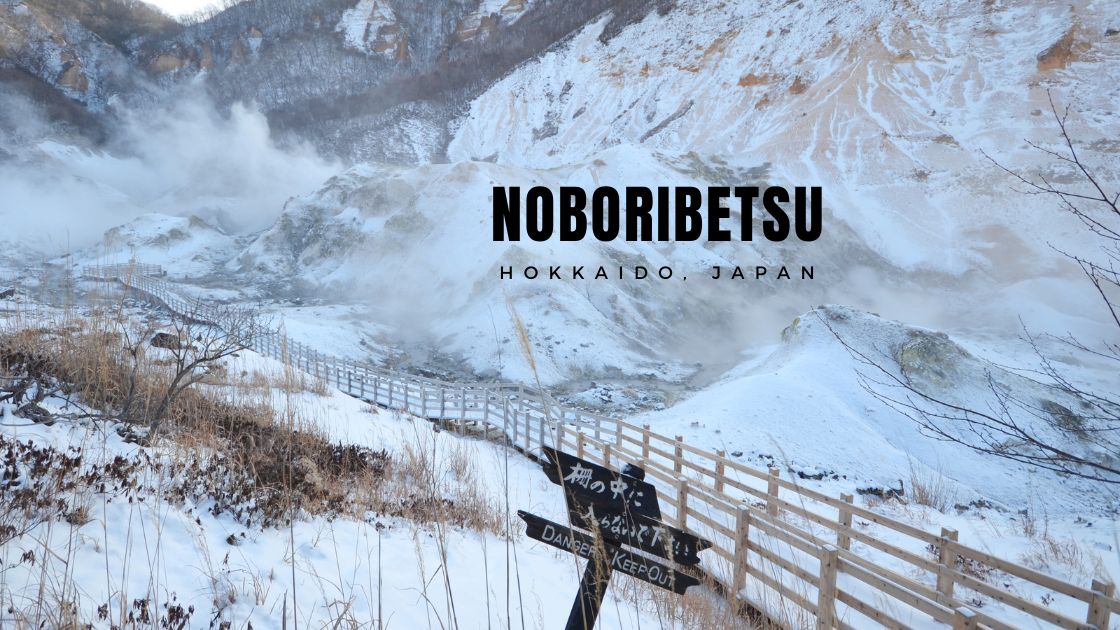
If there’s one place in Hokkaido that perfectly blends volcanic drama with deep relaxation, it’s Noboribetsu. Known as one of Japan’s most famous onsen towns, Noboribetsu is where steam rises from the ground, sulfur scents fill the air, and the landscape constantly reminds you that the earth here is very much alive. This Noboribetsu travel guide walks you through a full day exploring the town’s highlights; from Hell Valley to natural footbaths and a memorable onsen experience.
Nestled in southwest Hokkaido, Noboribetsu isn’t just a stop for hot springs. It’s a destination that engages all your senses. Every step feels intentional, every pause rewarding, and every soak unforgettable.
This Noboribetsu travel guide is part of my Hokkaido trip series. For a complete overview of the trip, including a sample itinerary, where to eat and stay, please refer to my full Hokkaido itinerary.
Enma-do Hall
The day begins at Enma-do Hall, a quiet yet imposing structure that introduces visitors to Noboribetsu’s darker folklore. Inside stands a massive statue of King Enma (Enma Daio), the Buddhist ruler and judge of the underworld. His stern expression and towering presence are impossible to ignore.
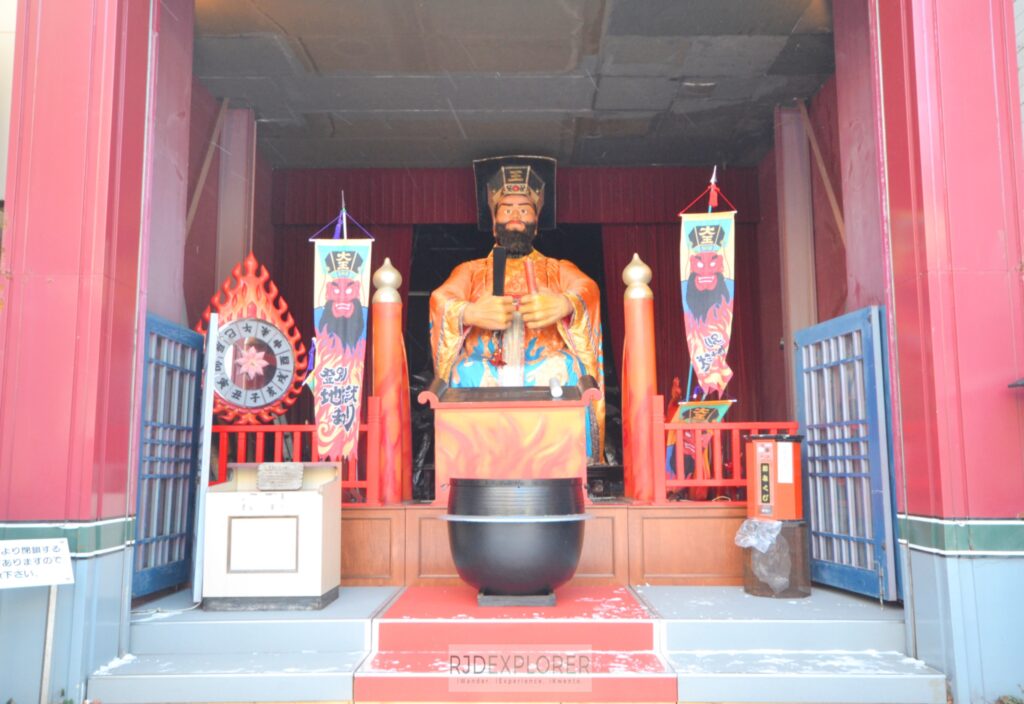
Despite its intimidating theme, Enma-do Hall feels calm and grounded. It’s a gentle introduction before heading into the raw, volcanic heart of the town. Even for travelers who don’t usually seek out temples, this stop adds context and character to the Noboribetsu experience.
Jigokudani, Hell Valley
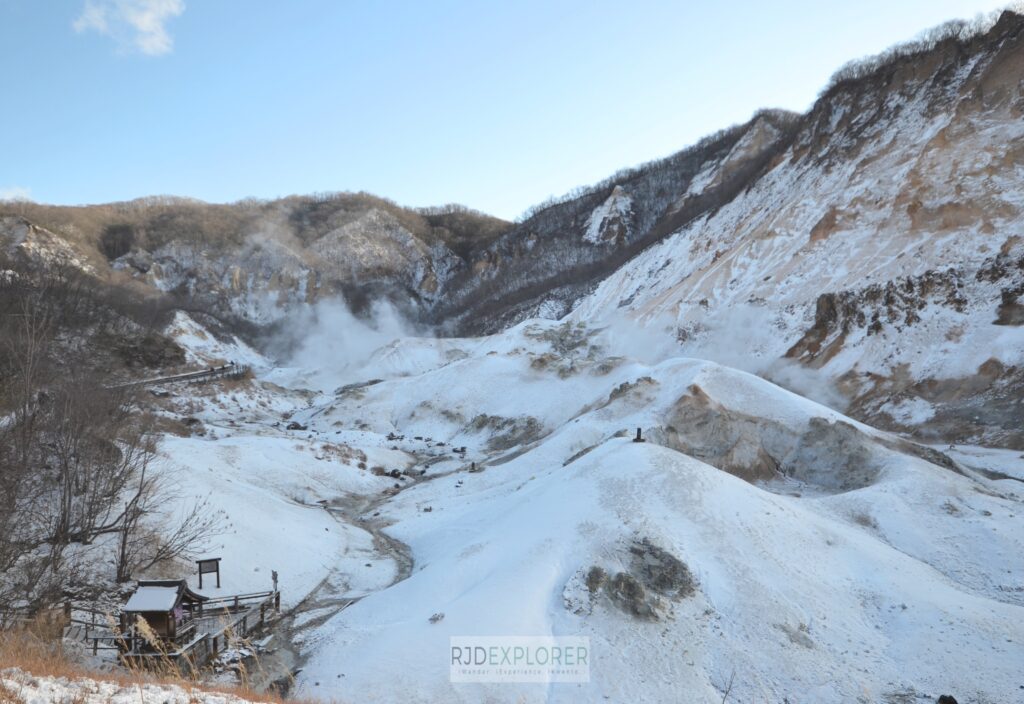
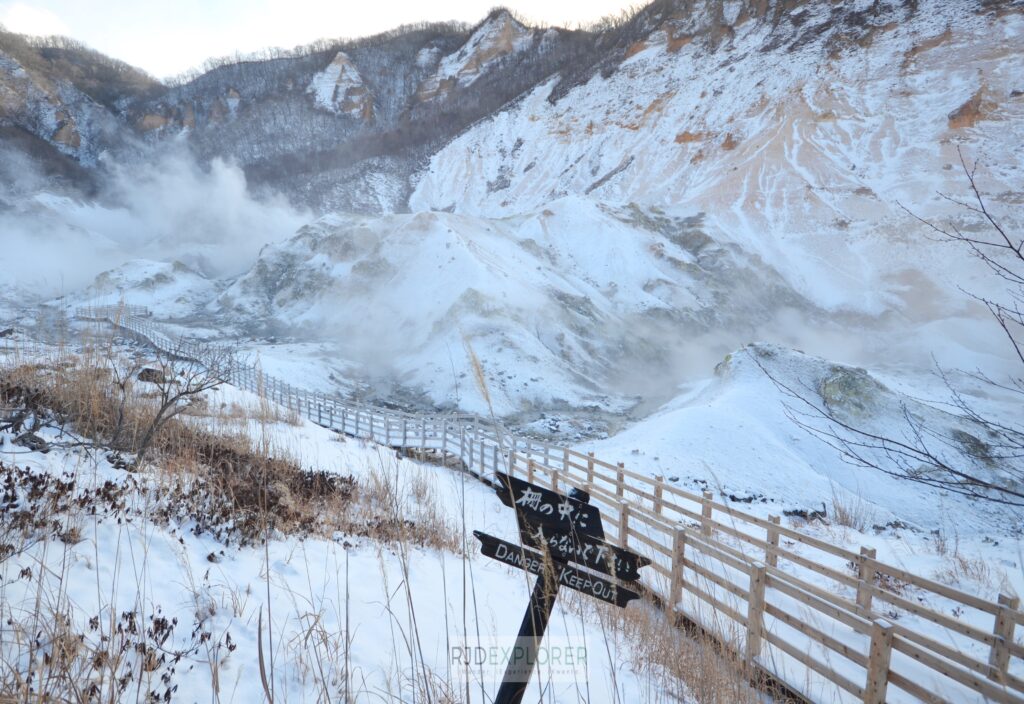
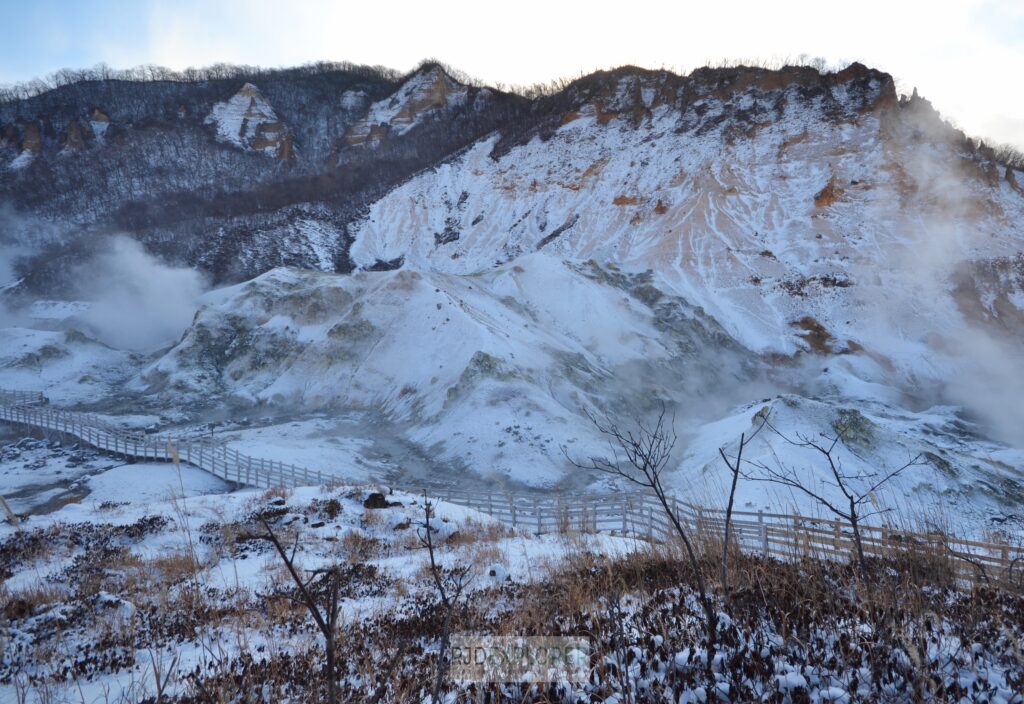
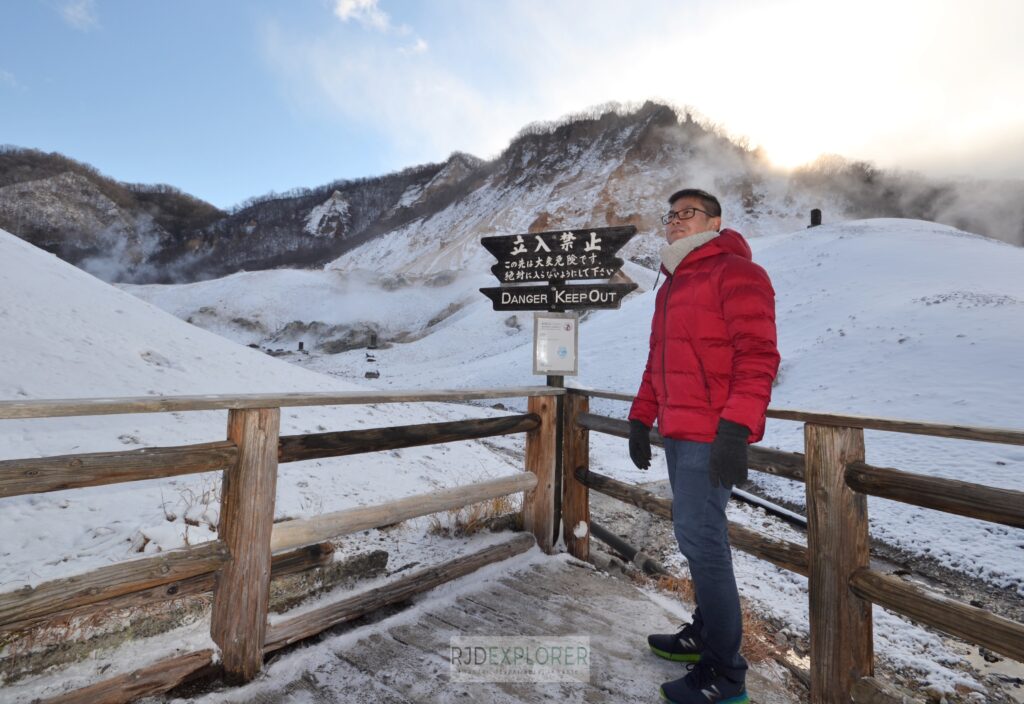
From Enma-do Hall, the path leads toward Noboribetsu Jigokudani, famously known as Hell Valley. The first viewpoint immediately delivers: steam vents burst from the ground, sulfuric rivers carve through the valley, and rugged cliffs stretch in every direction. It feels otherworldly, like stepping into a landscape shaped entirely by nature’s force.
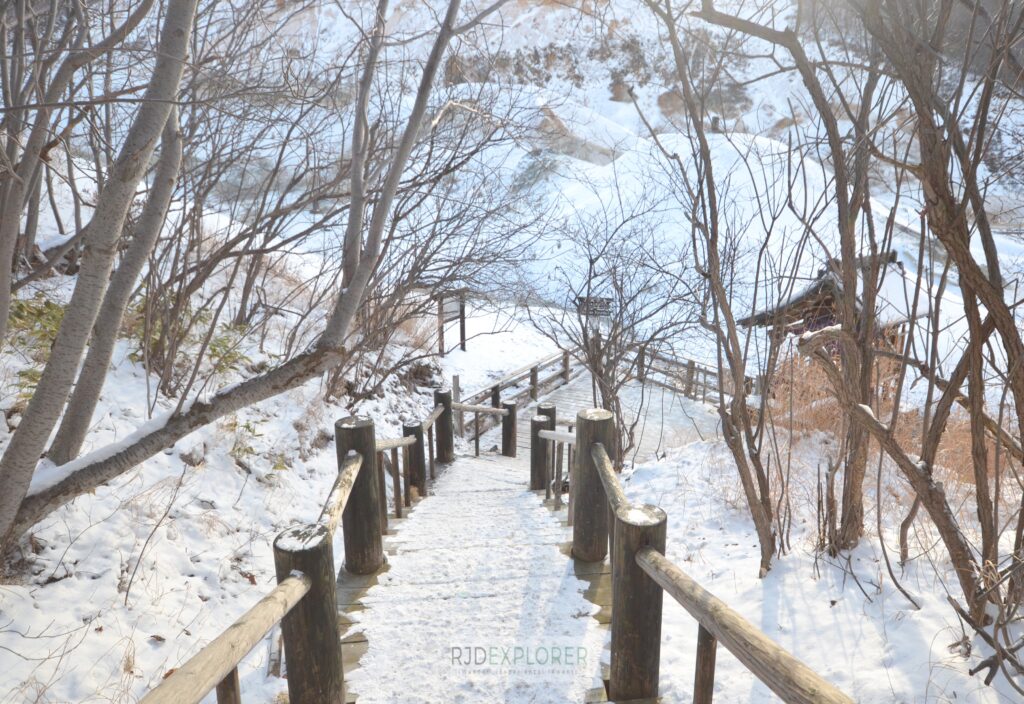
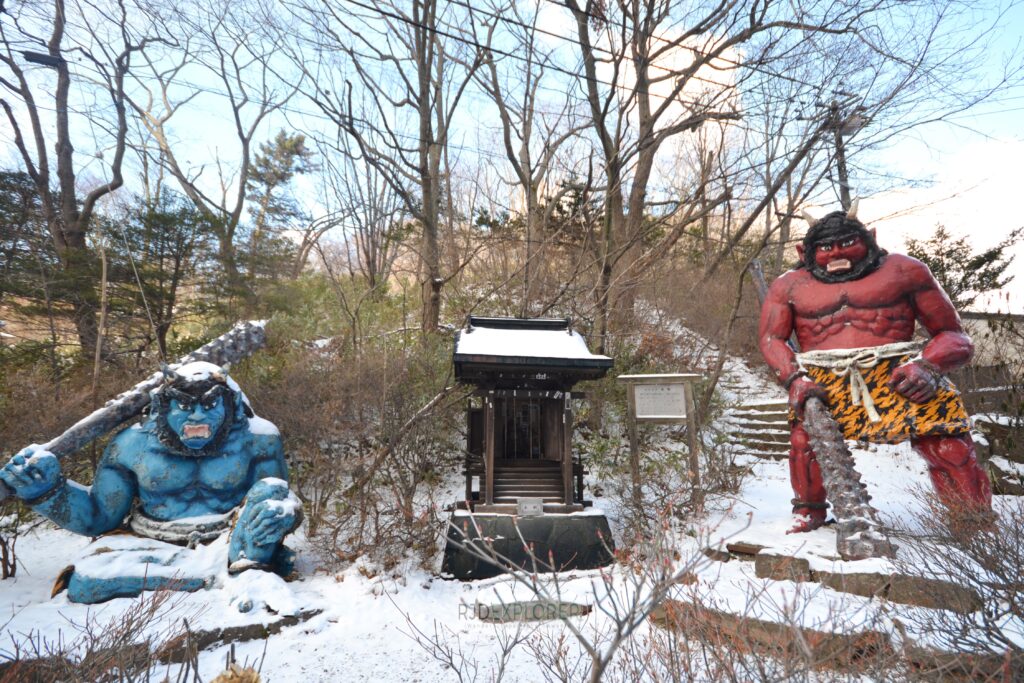
Standing guard at the entrance are the iconic red and blue oni statues, symbols closely tied to Noboribetsu’s identity. They set the tone for what lies ahead and mark the transition from town to terrain.
Walking deeper into Jigokudani’s trails, the experience becomes more immersive. You can feel warmth radiating from beneath the wooden paths, hear the constant hiss of steam, and catch the sharp scent of sulfur in the air.
Oyunuma River Footbath
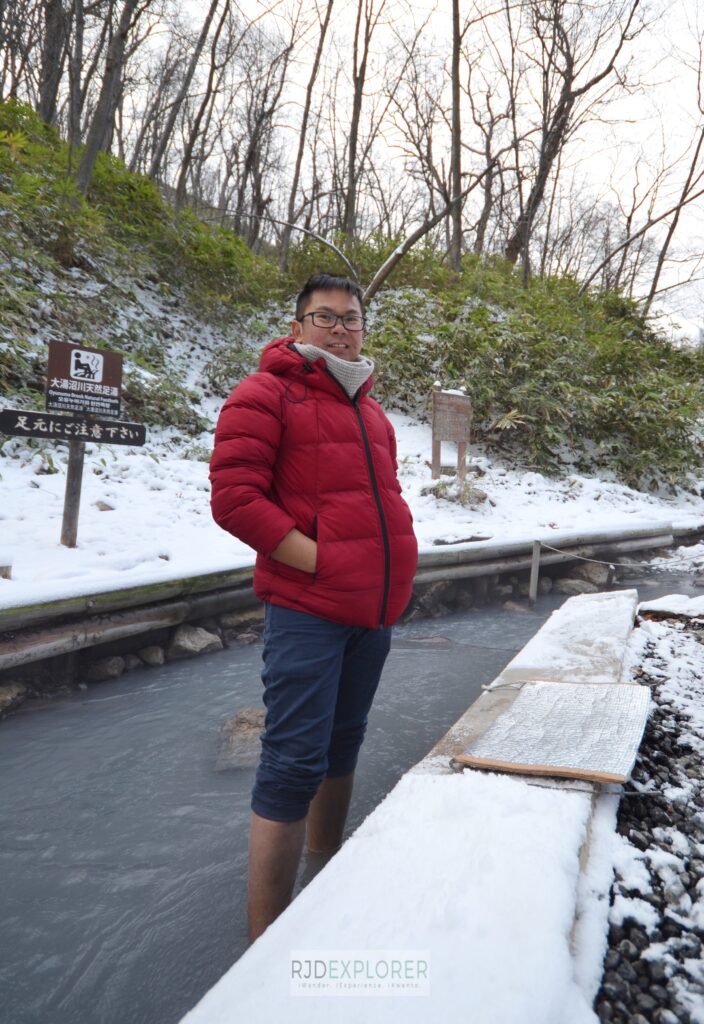
After exploring Hell Valley, the trail leads to Oyunuma River, home to a natural footbath fed by geothermal waters. Here, visitors can sit by the flowing river and soak their feet in warm, mineral-rich water.
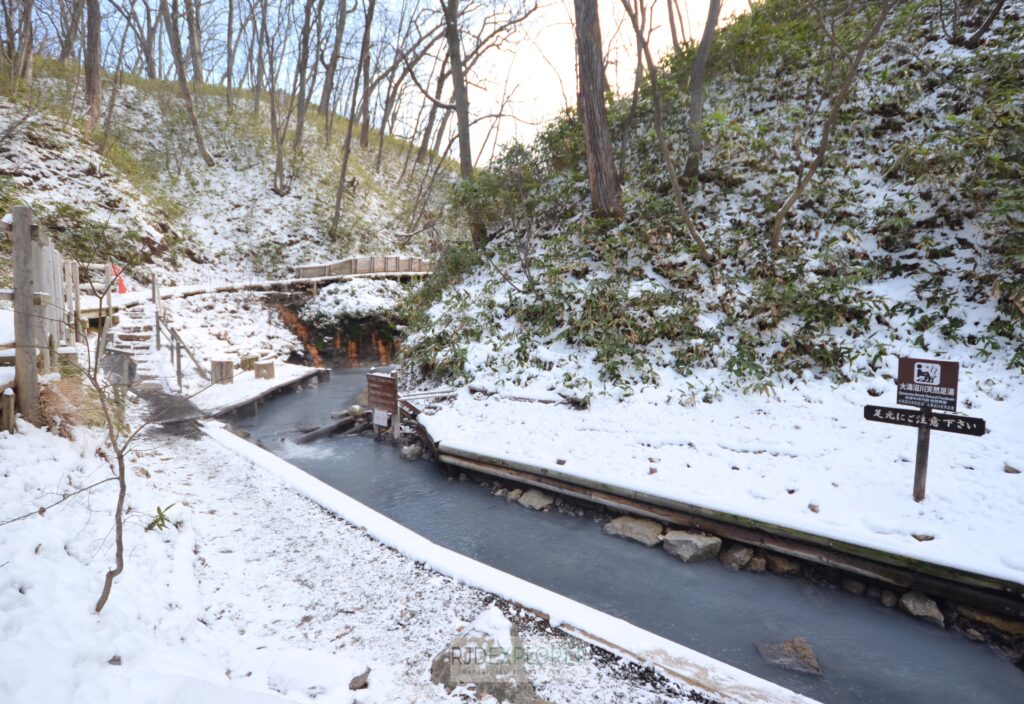
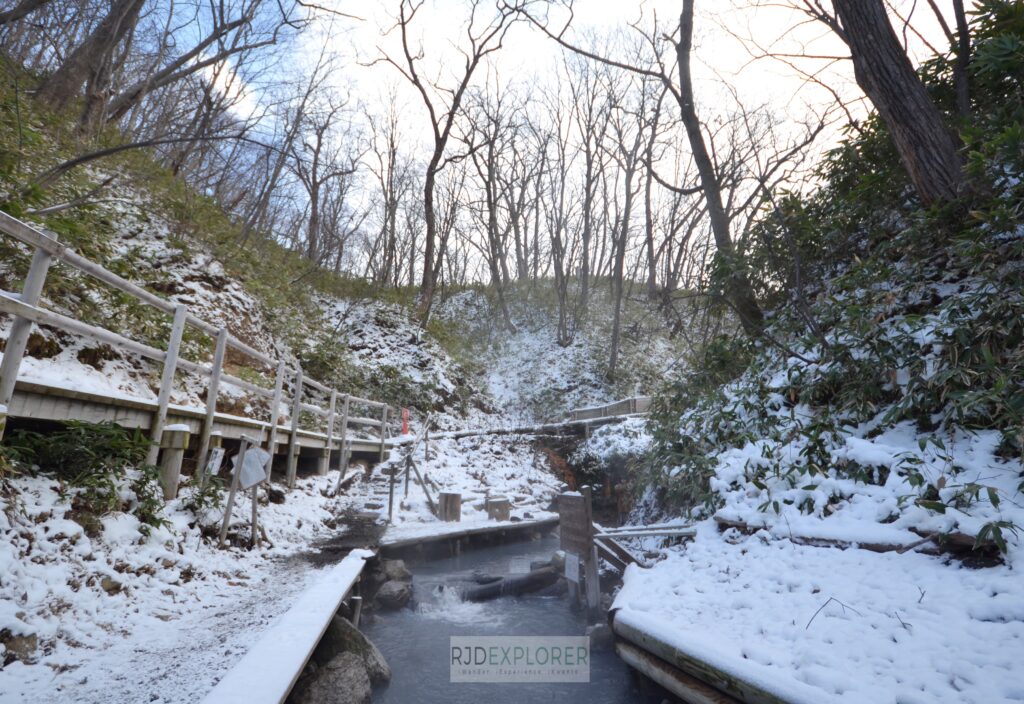
The contrast is what makes it special. Cold air brushes against your skin while warmth travels up from the river below. Surrounded by nature, it’s the kind of simple experience that makes you stop checking the time and just sit still for a while.
Onsen at Noboribetsu Sekisuitei
No Noboribetsu travel guide would be complete without an actual onsen experience. I visited Noboribetsu Sekisuitei, choosing to avail only of their onsen facilities rather than a full stay with meals. The property offers both indoor and outdoor baths, but the outdoor onsen is where the magic happens.
Soaking in steaming hot water while winter air surrounds you is something that’s hard to explain but impossible to forget. The warmth sinks deep, the cold sharpens your senses, and everything else fades into the background. This is what Noboribetsu does best, turning a simple soak into a memory. As an onsen town, Noboribetsu encourages visitors to try as many baths as possible. Each one has its own atmosphere, temperature, and view, making every soak feel different.
Bus Back to Noboribetsu Station
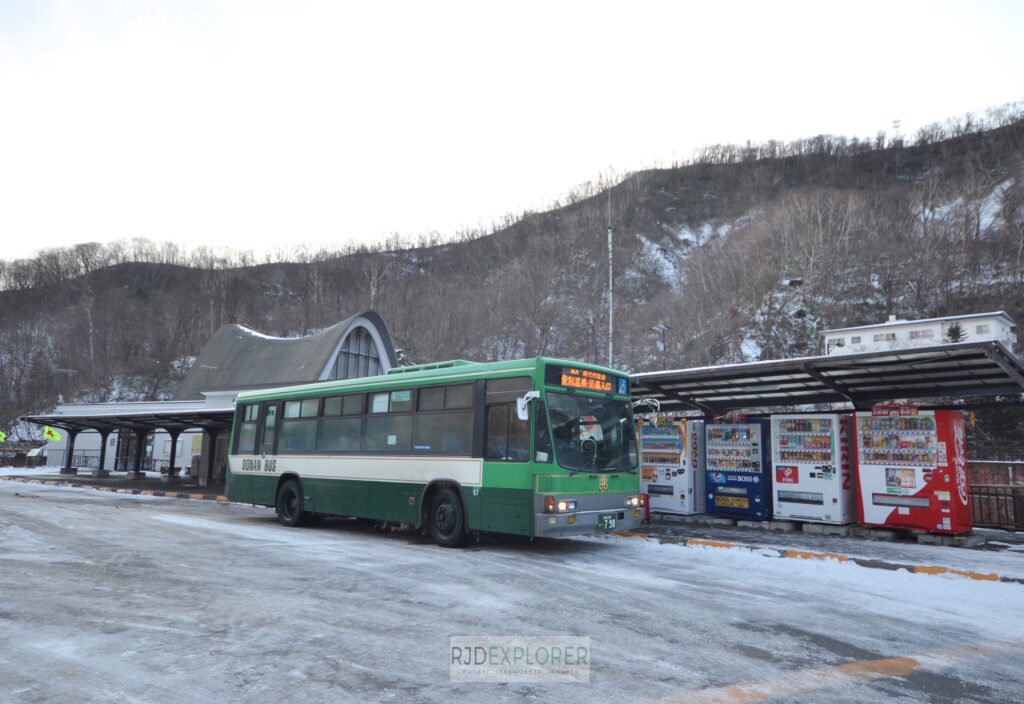
After a full day of walking, soaking, and taking it all in, it’s time to head back. Local buses make it easy to return to Noboribetsu Station, but one practical reminder stands out: always check the last bus schedule. It’s easy to lose track of time after an onsen, and missing the final bus is a mistake you don’t want to make. A quick schedule check ensures a smooth end to the day.
Noboribetsu is more than just an onsen town, it’s an experience shaped by fire, water, and time. From the imposing presence of Enma-do Hall to the steaming paths of Jigokudani, the quiet comfort of the Oyunuma footbath, and the unforgettable outdoor onsen experience, this destination leaves a lasting impression.
Whether you’re visiting Hokkaido for the first time or returning to explore deeper, Noboribetsu deserves a full day on your itinerary. It’s a place that slows you down, warms you up, and reminds you why travel is as much about feeling as it is about seeing.
How to Get to Noboribetsu from Sapporo
Traveling from Sapporo to Noboribetsu is easy thanks to Japan’s reliable public transportation. Visitors can choose between trains or highway buses, depending on whether they prefer speed, convenience, or cost savings. Both options deliver a smooth journey into Hokkaido’s famous onsen town.
By Train and Local Bus
One of the most comfortable ways to reach Noboribetsu is to take the JR Limited Express from Sapporo Station to Noboribetsu Station. This route takes about 70 minutes. Fares are higher than local trains, but the reserved seats make the trip easy and relaxing, particularly during peak travel periods.
Once you arrive at Noboribetsu Station, a short ride on a local Donan Bus will take you to the onsen district. The bus trip lasts around 15 minutes and requires a separate fare. If you have luggage or prefer not to wait, taxis are available, though they are a more expensive option.
By Highway Bus
For those who want a straightforward journey without transfers, direct highway buses operate between Sapporo and Noboribetsu Onsen. These buses leave from terminals near Sapporo Station and arrive close to the main onsen area. The journey takes roughly one hour and forty minutes to two hours, depending on traffic.
Tickets are generally less expensive than the train, making buses a good choice for budget-conscious travelers. However, departures are less frequent than trains, so checking the schedule in advance is essential. This single-ride option is simple and convenient, especially if you’re traveling light.
Travel Tips for Public Transport
Planning is key for a stress-free trip. If taking the train, consider reserving a seat on the limited express, particularly during weekends, holidays, or winter vacation periods. For the bus, confirm the timetable ahead of time to ensure you catch your preferred departure.
Keep in mind that the onsen district is not directly at Noboribetsu Station, so allow some extra time for the bus or taxi to reach your final destination. Whether you choose the train with a connecting bus or a direct highway bus, both methods provide a scenic and efficient way to arrive in this remarkable Hokkaido town.